
How much does 3D printing cost?
Posted by Ben Mazur 05.05.2020
 Factors that affect 3D printing cost
- 3D printing often costs less than conventional manufacturing for low volumes
- 3D printing cost can vary significantly depending on the materials and technology you need
- Large, thick or solid parts take longer to build and use more material making them more expensive
3D printing cost compared to conventional manufacturing
3D printing is a very useful collection of technologies and processes for producing physical components and models without the initial expense of conventional manufacturing processes such as tooling. Tooling is the sometimes costly and lengthy process of creating a mould or other piece of forming equipment to allow high volume end components to be moulded, cut or bent at a high rate from relatively low cost raw materials. You need to invest in time and money into tooling to be able to produce large volumes of components in minutes or even seconds.
With 3D printing however, objects are built up in fine layers (sometimes only a few microns thick) by bonding, melting or fusing liquefied resins, filaments or powders. This can mean that 3D printing an object could take many hours which would only take a matter of seconds using a conventional process. However 3D printing does remove the need for up front tooling which may be costly and unnecessary for low volumes. The raw materials such as the powders and resins used in 3D printing can also be significantly more expensive gram for gram when compared to materials used in conventional manufacturing.
3D printing is usually cheaper than conventional manufacturing processes at lower volumes where the cost of tooling wouldn’t be justifiable. But there is always a tipping point where a quantity of 3D printed parts will cost more than tooling and moulding.
How much does 3D printing cost?
So how much does 3D printing cost? There are two factors at play, the first is how long your component will take to print, the second is how much material it will require to build. This will usually be calculated in grams, so little weight savings will make your parts cheaper to 3D print. The overall size and shape of your model will have the biggest influence on the final 3D printing cost. Printing a large, solid object will cost more than printing an object which has been hollowed or split into multiple smaller parts. This is because taller parts, solid parts or parts with thick walls will take longer to print and use more material.
The cost of 3D printing can vary significantly between different 3D printing technologies. As a general rule of thumb, powder based systems which use a bulk powder which is fused together such as Selective Laser Sintering (SLS) tend to be cheaper as the print quickly and unused material can usually be recycled. Processes such as Fused Deposition Modelling (FDM) which use heated, extruded plastic filaments also tend to be cheaper since the raw material is widely available and relatively inexpensive. 3D printing technologies such as Stereolithography (SLA) and Polyjet which use specialised resins which cure and solidify in the presence of ultraviolet light tend to be more costly. This is due to the raw materials themselves costing more.

Want to know how much will your model cost to 3D print? Use our free online quoting tool to get an instant, customisable quote
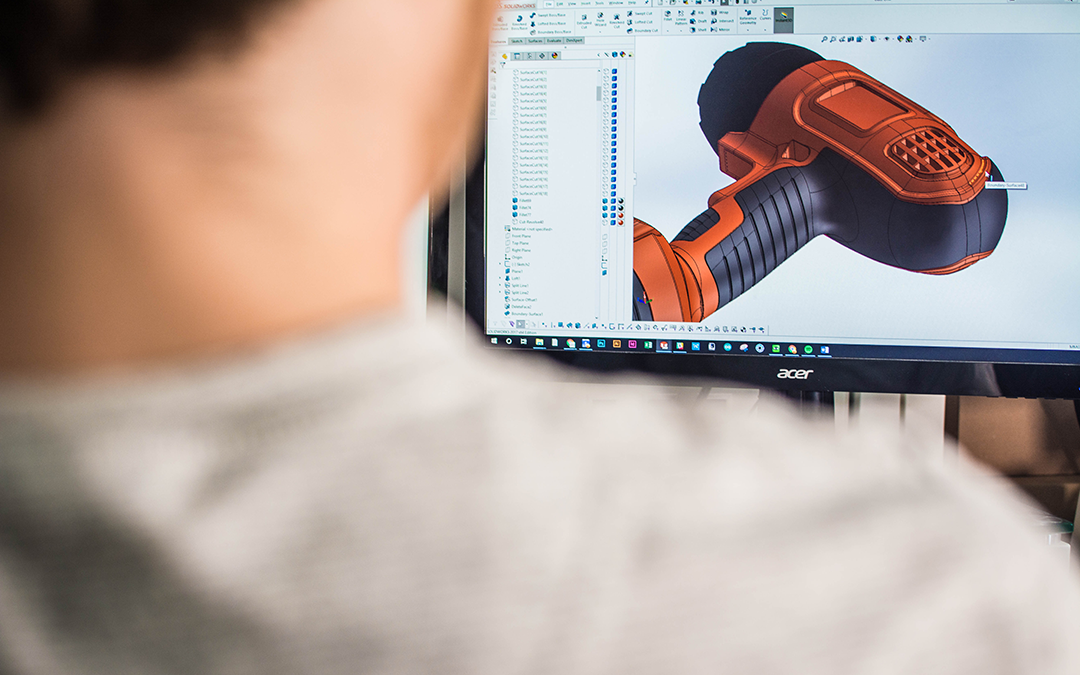
How to make an STL file for 3D printing
An STL file is a 3D is the basis for any 3D printing project. An STL file is comprised of lots of triangles which are all connected to form a single, closed volume. That volume represents the physical object to be 3D printed….